
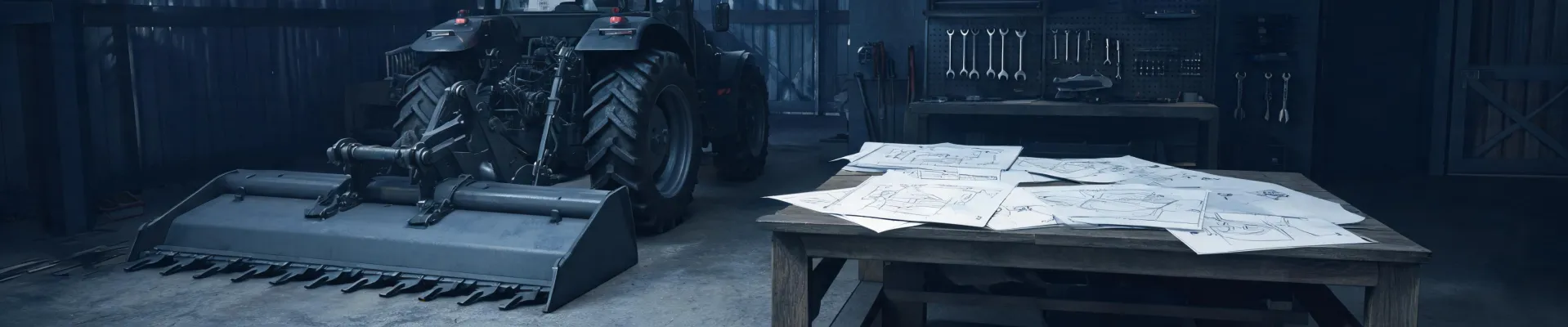
Two growers pull into the same dealership lot with the same budget. The first walks the aisle with a tape measure, confirms the pins drop into the lower links, and drives home with an implement that never leaves the trailer, because the tractor has no rear auxiliary outlets to feed it. The second opens the tractor manual the night before and writes three lines on an index card: the PTO rating, the number of auxiliary hydraulic lines, and the three-point hitch setup.
The gap between those two buyers is not luck or brand loyalty. Compatibility is decided at the interface: the PTO shaft that has to spin the implement, the hydraulic lines that have to feed it, and the three-point hitch that has to carry and lift it. Engine horsepower, the figure printed largest on the brochure, drives none of those three. Start at the interface and the buying decision gets short.
Why a Fitting Hitch Is Not Compatibility
The hitch is the easiest thing on the tractor to check and the least informative. A pin that drops into the lower link tells you the implement can hang; it says nothing about whether the tractor can spin it, lift it under load, or send oil to a cylinder. That is where a lot of purchases stop, because the attachment physically fits and the price looks right.
A tractor carries three separate horsepower ratings, engine, drawbar, and power takeoff, and only one of them describes what reaches the implement. A machine that looks strong on the engine figure can be ordinary at the shaft. Get that ordering wrong and the mistake is expensive in a specific way: the implement arrives, mounts cleanly, and then either bogs down in heavy going or never gets the hydraulic supply it was built around.
Three things decide the purchase, and the pin fit answers none of them. A workable setup needs a sound hydraulic system with auxiliary lines to the rear and a three-point hitch to mount and lift the implement, and safe use depends on equipment that is right-sized and in good condition. Each of those is expensive to fix after delivery, and none of them shows up in a photo of the implement mounted on someone else's tractor.
Match the PTO Rating to the Implement
The PTO rating is the number that actually does the work, and don't skip this one. A rotary cutter, a tiller, a spreader, a small square baler, anything driven by a shaft off the back of the tractor, is asking the power takeoff for torque. So the PTO rating is the figure you hold against the implement's stated requirement.
Engine horsepower is measured at the engine and is the wrong figure for this comparison. Drawbar horsepower describes pull at the drawbar, after the drivetrain and tires take their share, which is the number that matters for a plow or a ground-engaging tool. PTO horsepower is what the shaft delivers, and it is a different figure again.
The check itself takes one line: the implement's requirement in PTO horsepower against the tractor's PTO rating, both read from documents for the exact model rather than a family brochure. When I read a listing, I check the PTO rating first, because a mismatch there cannot be repaired by a better hitch or an extra hydraulic line.
There is no universal horsepower figure that settles this across every compact tractor. Ratings move with model and option configuration, so a single number quoted for a whole category is a question for the dealer, not an answer. Ask for the PTO rating from the manual for the exact tractor on the lot, and get it in writing if the deal is moving fast.
Check Auxiliary Hydraulics and Three-Point Hitch
Auxiliary hydraulic lines are the oil supply for implements that do more than spin: a grapple, a bale squeeze, a folding implement, a top link that adjusts on the move. They are a separate item from the hitch itself, and a tractor can carry a three-point hitch and still have no rear outlet to plug into.
The three-point hitch is the mounting and lifting interface, made up of the two lower links, the top link, and the lift arms that carry the load. Sizing varies between tractors, and the implement's pins have to match the hitch the tractor actually has, not the hitch in the brochure photo.
I found the auxiliary line count was the detail I had missed on the first listing I read, because the photo showed the implement mounted and made everything look settled. Photos do that. Line count and coupler type live in the tractor's specification, not in the picture.
Ask the seller two things before anything else: which lines and couplers the implement needs, and whether it needs a single line or a pair with a return. Couplers differ between tractors and no number holds across models, so the answer has to come from the exact tractor's manual paired with the implement's own instructions. A hose that fits is not the same as a circuit that works.
Run the Compatibility Checklist in Order
Run the checks in a fixed order, because each one can end the conversation and save you the rest of the work. Start with the task and the implement, not the tractor. Name what the machine has to do — mow between vegetable rows, move round bales, till a bed — and write down the implement that does it. Everything after this point is a compatibility question about that pair.
Second, record the tractor's PTO rating from the manual for the exact model, including the option configuration if the tractor was ordered with a different transmission or PTO arrangement. What matters here is that the number is the PTO figure; you have confirmed it when you can point to the line in the manual where it appears.
Third, line up the auxiliary hydraulics and the three-point hitch against the implement's requirements. Line count and coupler type are the details that break a deal, and the confirmation is a yes in the tractor's specification matched to a yes in the implement's instructions.
Fourth, check size and condition: the implement matched to the tractor's capability and to the width and scale of your ground, complete, and free of damage at the mounting points. If a step produces a maybe, that is the step to hold the order on until the paperwork clears it.
Confirm Size and Condition Before Paying
Right-sized means the implement's demands and the tractor's capability sit in the same range, and the implement fits the work in front of you rather than the work you might take on someday. An oversize cutter on a small tractor and an undersize one on ground that needs real coverage both fail, just in different seasons.
Condition is the part buyers skip when the paint is good. I noticed the wear on the mounting points before I looked at anything else on the last implement I inspected, because pin holes and link ends tell you how a unit has been treated. Bent pins, cracks around the hitch frame, a PTO shaft with its shielding missing or its lubrication neglected, absent hardware: each is a repair quote, and together they are a reason to walk.
Paperwork is the third confirmation. I asked for the manual covering the exact model, not the family brochure, because the manual is where the PTO requirement, the hydraulic needs, and the hitch setup are actually stated. A written compatibility statement does the same job when the manual is gone, provided it names the tractor model and the implement side by side.
Do Not Copy Another Brand's Approval
The references behind this checklist are university extension machinery-selection publications. They explain how horsepower ratings divide, what a hydraulic and hitch system has to provide, and why size and condition decide whether equipment is safe to use. They are not an approval list for any brand or model, and they carry no model-specific values for the tractor sitting in your shed.
That boundary matters the moment a seller says an attachment is approved for your tractor. If you are shopping a Kubota B2301 or B2601, or a John Deere 1025R, the interface details for that machine come from that model's own documentation and option list. Approval terms written for one brand do not transfer to another, and a dealer's general assurance is not the same thing as a document naming your model.
I would not sign the order until the exact model appears in writing with the implement identified beside it. Suppose the listing says fits compact tractors and the salesperson repeats it back to you: it is still a category claim, and your tractor is a specific machine with its own PTO rating, its own auxiliary line count, and its own hitch. Where the documents stop, the answer is a question to the seller, not a guess on your part.
Tonight, open the manual for your exact tractor and start a page you will keep: what the shaft delivers, how many auxiliary lines reach the rear, and which hitch the implement will meet. Take that page to the dealer and read your first question off it. The implement that comes home will be one the tractor can actually run, and you will know that before the invoice, not after.
